Rusts little
Stainless
Low upkeep
See this choicePick-for-me guide
Brief answer
Japanese knives are so good because a hard steel edge is forge-welded to a softer iron body, then hammered, hardened and tempered by hand.
What the sources say
Two taps to a steel lesson
Say what you most want to understand about the metal and, for edges, how long you can spare; a listing appears with its starting price.
Best choice for you
from $152
The session lasts 3 hours and the listing is rated 4.88 from 800 reviews.
Best choice for you
from $64
It is a 3.5-hour tour from Osaka, rated 4.80 from 82 reviews.
Best choice for you
from $61
It is a 1-hour workshop rated 4.90 from 279 reviews.
Best choice for you
from $159
It is a 2-hour class limited to 3 participants.
Reputation is not a metallurgy lesson. This guide takes the official craft descriptions of Sakai, Tosa, Echizen and Sanjo, and the knife village's own notes on stainless, carbon and clad steel, and shows what actually separates these blades.
Editorial team, knifemakingkyoto.com · Updated November 6, 2026 · 7 min reading time
Basics
When someone asks why Japanese knives are so good, they usually mean a keen edge that lasts. The official craft descriptions give that quality a concrete cause. Many traditional kitchen knives are made by forge-welding a hard carbon-steel cutting edge to a softer iron body, which gives a hard edge together with a tougher supporting layer.1,9 The hardness does the cutting; the iron absorbs the shock.
The hammer adds to it. Sanjo's craft sheet says forging increases the blade's strength by hammering out any space in the inner part of the metal, resulting in a high degree of strength and abrasion resistance.2 The same sheet contrasts hand-hammered blades with modern ones made by stamp pressing and polishing, techniques developed after the second world war.10 Those are different ways to arrive at a knife shape, and the difference lies in how the metal is treated on the way.
Geometry completes the picture. Sakai's tourism bureau describes single-edged knives whose acute angle gives the cutting edge and a smooth cut plane.11 The Embassy of Japan in Singapore explains that such knives cut fish and vegetables without damaging their fibers or membranes.12 So a good Japanese knife is a combination: layered steel, hammered metal, careful heat and a deliberate edge.
Regions side by side
| Region | Harden | Temper | Note |
|---|---|---|---|
| Sakai | 750 to 800°C6 | 180 to 200°C7 | Oil may be used in tempering28 |
| Tosa | 770 to 800°C25 | About 170°C29 | One artisan makes the whole blade30 |
| Echizen | About 800°C26 | 150 to 220°C31 | Double layering of plates32 |
| Sanjo | 780°C27 | 50 to 200°C33 | SK or Yasuki steel for edges34 |
Each cell is the figure that region's own craft description gives for the stage.6
The sandwich construction deserves a closer look, because it explains a lot. Sakai City describes cutlery with a layered structure of soft ferrite and hard steel.19 The Tosa craft sheet adds that placing hard steel between soft iron prevents the steel from breaking.20 The hard layer is thin and costly to make; the soft iron carries it, and if the blade is dropped or twisted it flexes instead of snapping.
A cross-section of a single-edged knife shows the join: soft iron and steel bonded together, with the boundary line between them visible.21 In Sakai's polishing sequence the hazing stage rubs kneaded whetstone powder over the blade to give the iron a flat subdued color and shine the steel, so the join becomes a feature of the finished knife.22
There is an alternative. Knives known as honyaki are forged from a single piece of steel, and their construction and heat treatment vary with the type of blade.23 Sakai's tourism bureau notes that professional chefs also use knives made only from steel.24 Honyaki knives are the craftsman's preference for some tasks, but they give up the safety margin that the soft iron provides, so they ask more of the user.
Whether Japanese steel knives are good depends on which steel you pick. Several kinds cover what a buyer meets, and the Takefu Knife Village explains each in plain terms. Stainless steel clad in stainless is described by its main feature: it rusts little.3 Because the steel is hard, it is a little harder to sharpen than an iron knife but sturdy, and the village recommends it if you choose by ease of care.35
Carbon steel works the other way. It rusts easily, but its greatest advantage is that its sharpness lasts, and it is easier to sharpen than a stainless knife.4 After use it should be wiped dry at once and stored with a thin film of oil, which holds rust back a little.36 Sakai's tourism bureau gives the same warning for hand-forged blades: they are weak to water and rust easily.39
Clad steel splits the difference. The village calls carbon steel sandwiched in stainless clad, and says it combines the lasting sharpness of carbon steel with the rust resistance of stainless.5 The steel in the middle can still rust, but the outer layers are stainless, so care is easier than with an iron knife.37 If you want a decision rule, it is this: choose stainless for low upkeep, carbon for the longest-lasting edge and clad for a compromise.
Steel structures
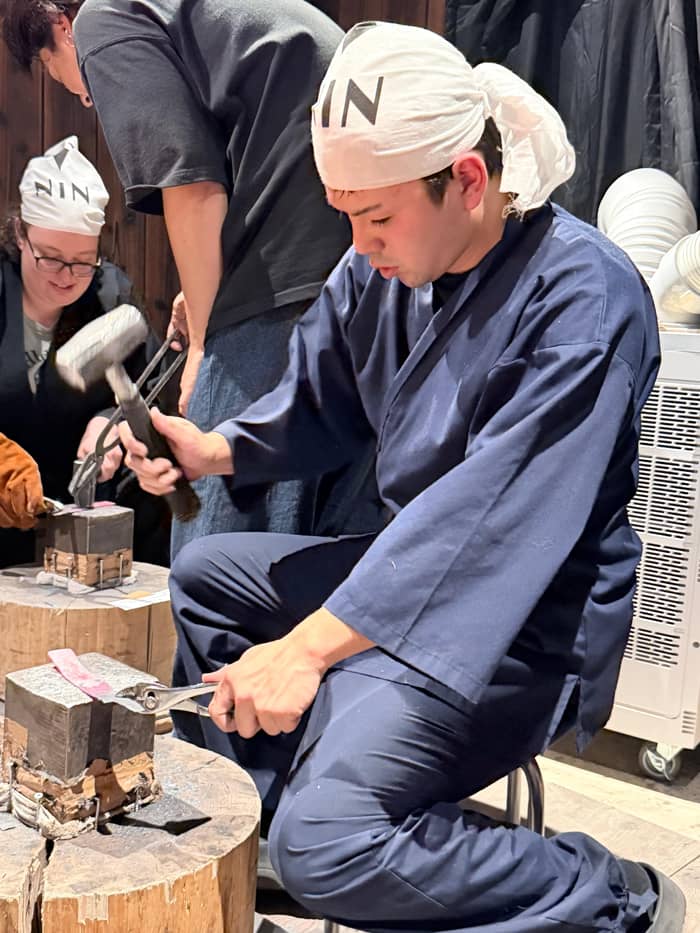
Rusts little
Low upkeep
See this choice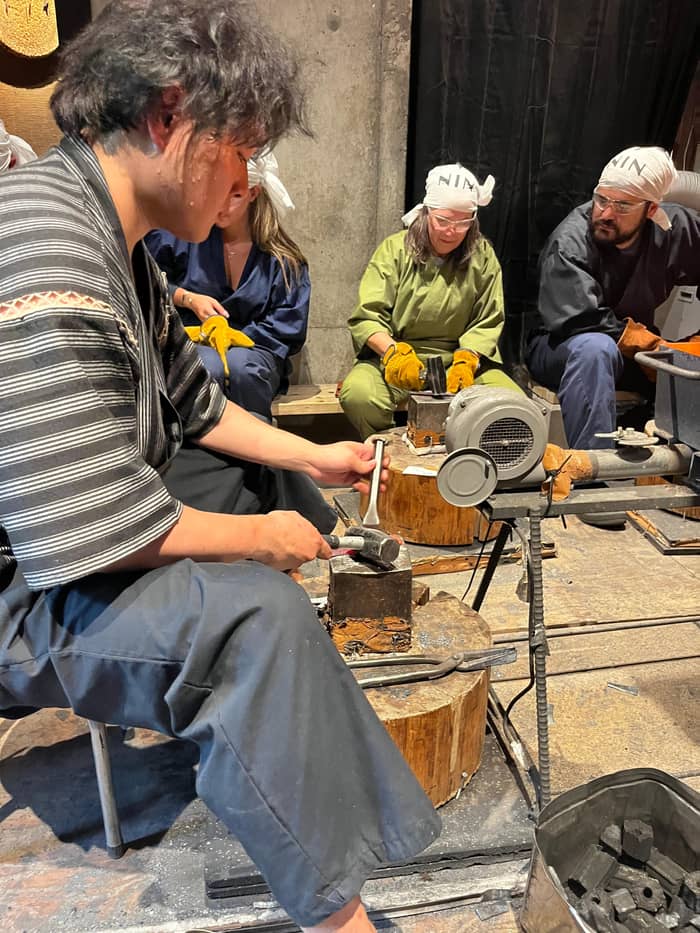
Needs oiling
Long-lasting edge
See this choice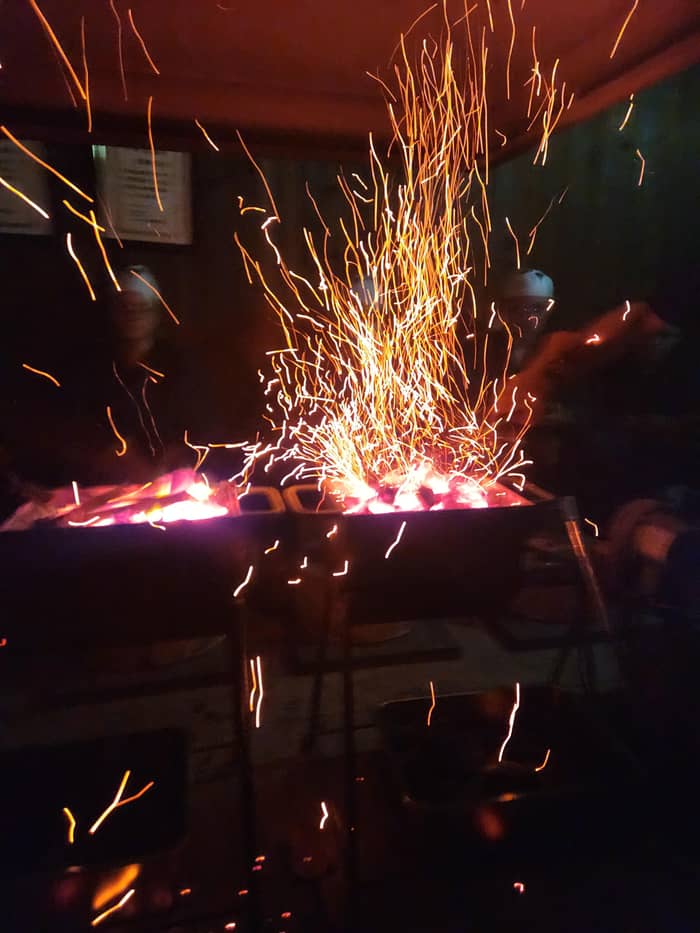
The compromise
Carbon core, stainless sides
See this choiceShops love to talk grades, so it helps to know how much the official sheets actually say. Sanjo's craft sheet states that carbon tool steel (SK) or Yasuki steel are most commonly used for the blade edges, and that soft iron is used for the body of everyday kitchen knives.34,42 That is the extent of the grade information in the sources used for this guide.
The craft sheets of Sakai, Tosa and Echizen describe how steel is handled rather than which grade is chosen: how it is bonded, how it is hardened, how it is tempered. A maker who names a specific steel can tell you more, so ask the person whose name is on the blade. A good maker will tell you which steel, which heat treatment and what the blade is likely to do over years of use.
Be careful with reading too much into a grade. In the sources here, the steel is a variable among several. Layering, forging, heat treatment, grinding and the geometry of the edge all contribute, and the same steel can make a mediocre knife in a workshop and a very good knife in another. The grade starts the conversation; the workshop finishes it.
Handwork against the machine
1306
A group of sword makers moves from Yamato province to Tosa.13
1661
Documents record about 20 full-time blacksmiths in the castle town.14
1973
Young craftsmen found a study society as mass production spreads.15
1980
Echizen is the first forged-blade center to receive the national Traditional Craft honor.16
1982
Sakai Uchihamono are designated a Traditional Craft on March 5.17
1993
Takefu Knife Village is completed in May.18
Hardness is a heat treatment, not a material. Quenching is an important task that determines the hardness of the blade.43 But a hard blade is brittle and will snap, so tempering is added to give durability and toughness.44 Every official craft sheet describes this pair, and the figures are close from region to region.
Sakai City heats the knife to 750 to 800°C and quenches it in water, then reheats it to 180 to 200°C and lets it cool naturally.6,7 Tosa heats the blade at 770 to 800°C and tempers at about 170°C.25,29 Echizen hardens at about 800°C and tempers at 150 to 220°C.26,31 Sanjo quenches at 780°C and tempers at about 50 to 200°C.27,33
Sakai's craftsmen judge the end of heating by splashing water on the blade and watching how the droplets run.45 Sakai City adds that, depending on the type of steel being used, oil may be employed in the tempering process.28 The detail matters because it shows the maker adapting to the steel: the recipe is a framework, not a single fixed program.
Video
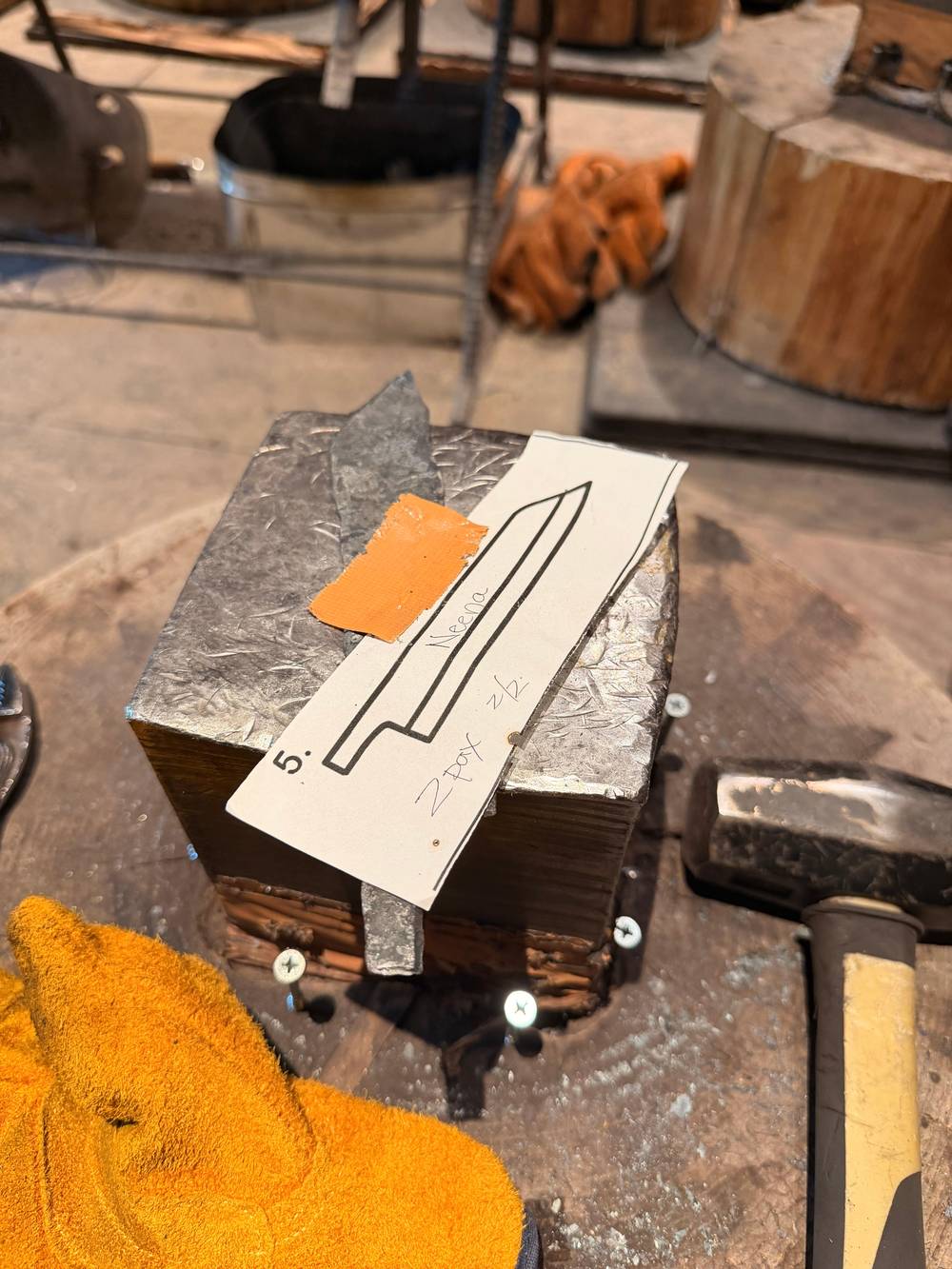
Business Insider on YouTube · The video waits until you tap play to load.
As each Sakai knife is hand-made, they tend to be expensive and custom orders can take months to fulfil.
Buying and keeping steel
Cost is part of the question. Why Japanese knives are so expensive has an official answer for Sakai knives from the Embassy of Japan in Singapore: because each knife is handmade, they tend to be expensive, and custom orders can take months to fulfil.8 That is a labor argument rather than a mystique argument, and it fits what the craft sheets describe.
The labor is divided. Sakai's craft sheet notes a defining division of labor among craftspeople responsible for forging, sharpening and handle fitting.46 Sakai City names the same stages as forging, sharpening and honing, and hafting.47 Each is a trade with its own tools and training, and a knife passes through each pair of hands.
Customization pushes the price up. Sakai blades are made to a length and thickness the customer specifies, to within several millimeters.40 Tosa work differs in the other direction: its forged blades are made by one artisan for the entire production process.30 Whichever model a maker follows, you are paying for hours of skilled handwork rather than for a mass-produced part.
The founders of the Takefu Knife Village faced exactly this contrast. They worried about the spread of stainless or cheap punch-out knives made by mass production.48 Their response, in 1973, was to establish a study society and, in May 1993, to open a cooperative open factory and direct sales store for 10 companies.15,18
Today the village lets the public look inside its museum and factory for free, to learn the history of Echizen knives and how they are made.38 It also runs experience programs that the public can join, with advance reservation required.49 Seeing a forge at work does more to explain steel than any amount of reading, because the color and sound of the metal tell the story.
For travelers staying in Kyoto, the equivalent is a short session at a working forge. The Kyoto knife making experience lasts 3 hours and starts from $152, and its listing carries 800 reviews at a rating of 4.8. Ask the smith which steel you are working and which bevel the finished blade carries; the answers apply everything in this guide to the knife in your hand.
FAQ
Many traditional kitchen knives forge-weld a hard carbon-steel cutting edge to a softer iron body.1
Sanjo's craft sheet says hammering out spaces in the metal gives a high degree of strength and abrasion resistance.2
Carbon steel rusts easily but keeps its sharpness longer, and is easier to sharpen than stainless.4
The Embassy of Japan in Singapore says each Sakai knife is handmade, so they tend to be expensive and custom orders can take months.8
The village's clad knives combine lasting sharpness with rust resistance.5
Honyaki knives are forged from a single piece of steel.23
Sources
Further reading
Wondering which Kyoto knife class suits you? A real person answers here.