Both sides
Santoku
The home all-rounder
See this choicePick-for-me guide
Brief answer
Famous Japanese kitchen knives include the santoku, gyuto and nakiri with an edge on both sides, and the deba, yanagiba and usuba with an edge on one side only.
Types and jobs
Two taps to a class
Say what you want to do with a Japanese knife and, for sharpening, how much time you have; the matching listing appears with its starting price.
Best choice for you
from $152
It lasts 3 hours and is rated 4.88 from 800 reviews.
Best choice for you
from $64
It lasts 3.5 hours, starts from Osaka and is limited to 10 participants.
Best choice for you
from $61
It lasts 1 hour and is limited to 10 participants.
Best choice for you
from $159
It lasts 2 hours, takes up to 3 participants and is rated 4.95 from 169 reviews.
Japanese knives are named for what they cut. This guide sorts them by edge and by job, using the descriptions of the makers' own village and the official Sakai sources, so you can tell a santoku from a deba before you buy or forge one.
Editorial team, knifemakingkyoto.com · Updated November 6, 2026 · 7 min reading time
Basics
Japanese knives divide into two families before they divide into names. The Takefu Knife Village calls the double-bevel knife the most common home kitchen knife, with an edge on each side.1 Its double-bevel knives are built, in basic structure, as a core steel sandwiched between a base metal of iron or stainless steel.8 The famous Japanese kitchen knives that Western cooks meet in shops, such as the santoku, gyuto and nakiri, belong here, and a cook switching from a European chef's knife will find them familiar.
The other family is single-bevel. A single-bevel knife has an edge on one side only, and is generally called a wabocho.2 Because the edge sits on one side, right-handed and left-handed versions exist.7 Sakai's tourism bureau says hand-forged knives of this kind are in principle the same as Japanese swords, with a single edge, which is rare when a double edge is the norm around the world.9
The Embassy of Japan in Singapore describes the payoff: the acute angle of a single-edged Sakai knife cuts fish and vegetables without damaging their fibers or membranes.10 The cost is practical. You buy for your hand, and you learn to sharpen one bevel rather than both. The village teaches sharpening on a double-bevel santoku and on a single-bevel ajikiri fish knife, which makes the difference easy to feel in a lesson.11
Types at a glance
| Knife | Edge | Main job |
|---|---|---|
| Santoku | Both sides | Meat, vegetables, fruit, fish3 |
| Gyuto | Both sides | All-round, chunks of meat14 |
| Petty | Both sides | Small jobs, fruit15 |
| Sujihiki | Both sides | Separating meat from sinew and bone16 |
| Nakiri | Both sides | Large vegetables4 |
| Deba | One side | Preparing fish, bones5 |
| Yanagiba | One side | Slicing fillets6 |
| Funayuki | One side | Deba and yanagiba jobs13 |
| Ajikiri | One side | Small fish12 |
| Usuba | One side | Vegetables, katsuramuki17 |
Descriptions follow the Takefu Knife Village's own knife guide.8
If a household owns a single Japanese knife, the santoku is the natural candidate. The Takefu Knife Village describes it as a general home kitchen knife that cuts meat, vegetables, fruit and fish.3 Anyone asking for the best Japanese cooking knives is really asking about jobs, and the santoku is built for the broadest set of them without a different knife for each ingredient.
The gyuto is a close cousin. The village describes it as a knife that cuts almost anything, like the santoku, and one that came from abroad as a knife for cutting chunks of meat.14 That foreign origin shows in its profile, which resembles a Western chef's knife. The gyuto is a good version of a familiar tool, with the Japanese emphasis on a keen edge.
Smaller relatives complete the group. The petty is an agile small knife that people often call a fruit knife, and its name means small in French.15 The sujihiki is longer than a gyuto with a slimmer tip, made for separating meat from sinew and bone.16 A cook with a santoku, a petty and a sujihiki covers most of what a home kitchen asks for, and every one of them is double-bevel and therefore ambidextrous.
Time with a knife
Durations as the listings state them: the Gion workshop, the beginner handle-fitting class, the blacksmith session and the Sakai tour.
The nakiri is the vegetable cook's friend. The Takefu Knife Village describes it as an old-fashioned square knife whose wide blade feels stable when you cut large vegetables.4 Its flat profile means the whole edge meets the board together, which suits chopping and slicing with a straight up-and-down motion.
The usuba is the same job taken further. The village identifies it by its edge, which runs in a straight line from tip to heel.17 If you have heard the word katsuramuki, the peeling of a vegetable into a long thin sheet, you have heard of the work an usuba does.18 Sakai's official craft sheet lists the usuba as the form Sakai developed for vegetables.19
The two knives show the split between families in practice. The nakiri is double-bevel and forgiving, a knife anyone can pick up. The usuba is single-bevel and demanding, a tool that professional cooks learn over time. A home cook who wants vegetables handled well should start with the nakiri, and treat the usuba as a later step if the craft starts to matter.
Starting points
Both sides
The home all-rounder
See this choice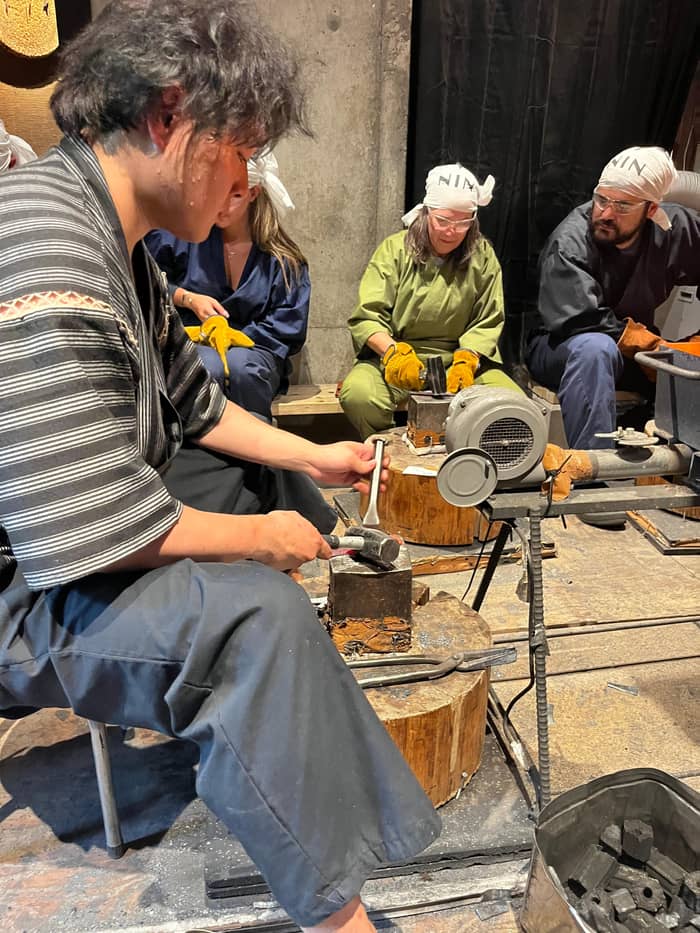
Square blade
The vegetable knife
See this choice
Thick blade
The fish knife
See this choiceFish is where single-bevel knives earn their reputation. The deba has a thick blade and is used mainly to prepare fish, and it can cut off tails and bones.5 The yanagiba is long and slim, also called the sashimi knife, and its length is there so that it cuts in one pull.6 Sakai's craft sheet names both families too, describing deba for preparing fish and long, narrow knives for slicing sashimi.19
The funayuki and the ajikiri fill the gaps. The funayuki is said to have been carried by fishermen going to sea, and its thickness lies between the deba and the yanagiba, so a single knife can do both jobs.13 The ajikiri is thinner and smaller than a deba, handy for small fish such as sardines and horse mackerel.12 Both are single-bevel knives, so pick the hand that matches yours.
Think of the set as a fish's journey through the kitchen. The deba prepares the fish and removes the head, tail and bones. The yanagiba then slices the fillet. The smaller knives take the daily fish that do not need a full set. You do not need every knife at the start; a household that cooks fish might own the funayuki, which is built to bridge the deba and the yanagiba.
A fish through the knives
Whole fish
The thick deba prepares fish and can cut off tails and bones.5
The fillet
The long yanagiba slices fillets in one pull.6
Small fish
The thinner ajikiri suits small fish such as sardines and horse mackerel.12
At sea
The funayuki sits between deba and yanagiba in thickness.13
The names above are only the beginning. The village notes that many more single-bevel types exist, including knives made for boning, for octopus and for shellfish.23 Sakai's tourism bureau says its single-edged knives have different shapes depending on their use.24 A shop that stocks a dozen patterns is not showing off; it is following the way Japanese kitchen work divides tasks.
Makers will also shape a knife to order. Tosa artisans can make any size or shape of blade in small production runs.25 In Sakai, blades are made to a length and thickness the customer specifies, to within several millimeters.26 A name on a shop shelf is therefore a starting point rather than a fixed pattern, and a smith will adjust length, weight and tip for the cook who asks.
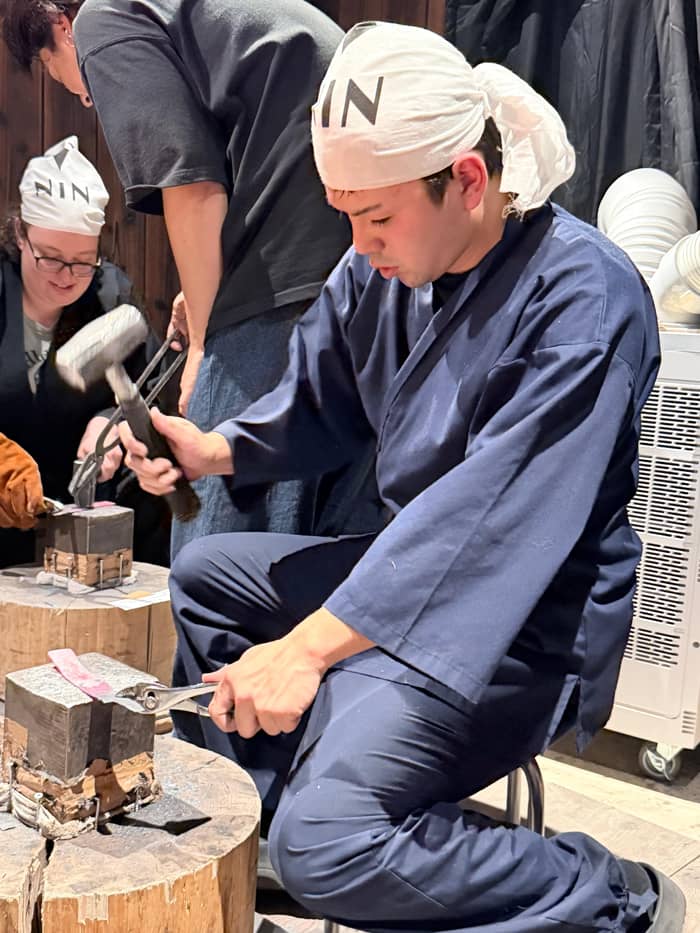
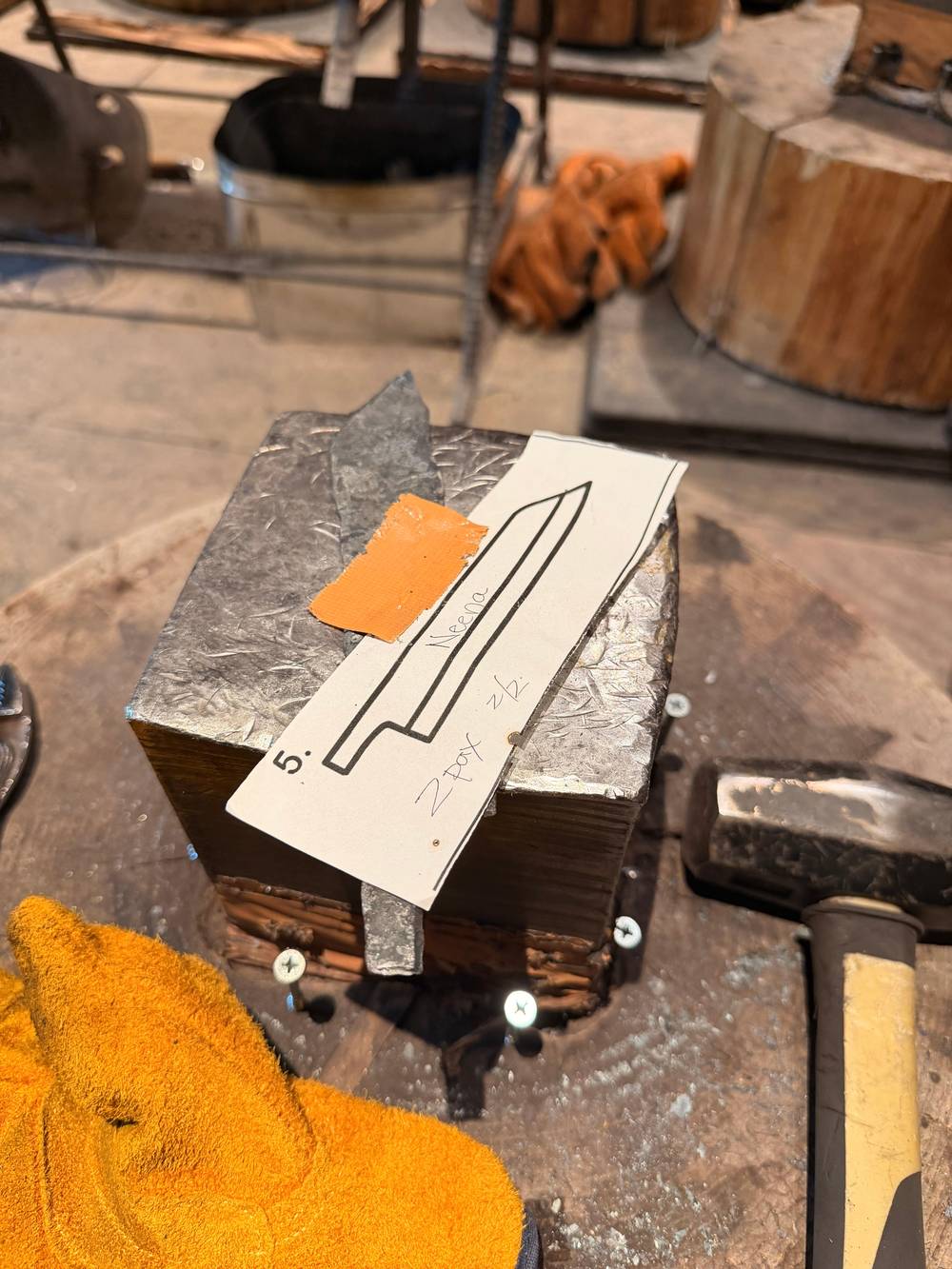
This is also the place where the craft class makes sense. A knife you forge yourself is not a named pattern off a shelf; it is a blade you shaped and finished, and the experience of that gives the types in this guide a physical meaning. Read the booking page for what the session produces before choosing, because the listing's title names the activity, not the pattern.
Video
Epicurious on YouTube · The video waits until you tap play to load.
Hand-forged knives are in principle the same as Japanese swords, with a single-edge.
Before you buy
Whether Japanese kitchen knives are the best depends partly on the steel. Steel changes how a type behaves, and the village makes the trade-offs plain. A stainless-clad knife is described as rusting little, and the village recommends it for easy care.27,28 Carbon steel rusts easily, but its greatest advantage is that its sharpness lasts, and it is easier to sharpen than stainless.29 The village's clad knives set carbon steel inside stainless to get both advantages.20
Care follows the steel. After using a carbon-steel knife, wipe it dry at once and store it with a thin film of oil to hold rust back a little.21 Sakai's tourism bureau says the same of hand-forged knives in general: they are weak to water and rust easily, so the moisture should be wiped off immediately after use.30 A busy home kitchen with a dishwasher habit is a good match for stainless, and a cook who enjoys a small ritual is a good match for carbon.
Some knives show a pattern from the forge. The village notes that the forging patterns on layered steel are called laminated, sumi-nagashi or damascus.31 That decoration is a by-product of how the layers were joined, and it does not by itself change what the knife cuts.
A short rule of thumb works for most readers. If you cook meat, vegetables and fish at home, start with the santoku, because the village describes it as cutting all of them.3 If you mostly chop vegetables, take the nakiri.4 If you prepare whole fish, add a deba later.5 The names stop being abstract once a knife is in your hand.
If you want to feel the difference in person, there are realistic routes from Kyoto. The knife making session is a 3-hour class from $152. A 1-hour craft and sharpening workshop in Gion starts from $61. A Sakai knife maker walking tour from Osaka runs 3.5 hours from $64. Each shows a different side of the same craft.
Whatever you choose, ask the maker about the knife in your hand before leaving. Which type is it? Which steel? Which bevel? Those questions turn a souvenir into a tool you know how to use, and every answer ties back to a section of this guide.
FAQ
The village describes it as a general home kitchen knife.3
It is long and slim, and its length lets it cut in one pull.6
Because the edge sits on one side only, there are right-handed and left-handed versions.7
Sources
Further reading
Wondering which Kyoto knife class suits you? A real person answers here.